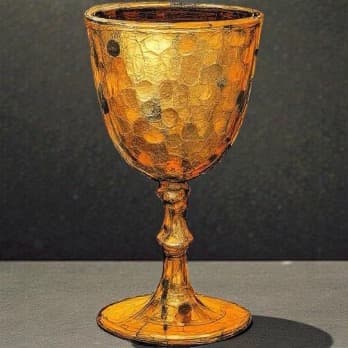
From the Betrothal Cup to the Wedding Garment
Part I: The Proposal (The Invitation)
The Gospel is the King’s son seeking a bride among the"spiritually widowed" and "fatherless." This invitation is sealed by three divine provisions:
● The Mohar (The Bride Price):
Your worth was established not by what you do, but by what He paid. He offered His life as the price to bring you out of your "spiritual widowhood"(desolation/separation) and into His household.
● The Cup of Redemption (Communion):
At the table in the Passover meal, Jesus offers the Third Cup to his disciples but does not drink from it himself. In ancient Jewish custom, this was the Marriage Proposal. When you drink, you are saying, "I accept Your life, and I give You mine." Jesus drinks this third cup through the offering up of his own life for us. The cup we drink when we celebrate Communion is representative of the third cup of redemption, or marriage cup, making it a time of renewal of these of our marriage vows in anticipation of the wedding feast at the marriage of the Lamb.
● The Ketubah (The Marriage Contract):
The New Covenant is our legal guarantee. It ensures that the Groom is committed to our protection, provision, and future.
Part II: The Daily Vows (Scriptural Worship)
In James 1:27, we find the definition of "Pure Religion" (Thrēskeia). While the Groom is away preparing a place, the Bride’s "worship" is her daily service in His name.
The Act of Worship
The "Assumed" View (Ritual)
The "Scriptural" View (Covenantal)
"To Visit" (Episkeptomai)
A social call or checking in.
To Inspect and Relieve: Like a priest inspecting the temple to ensure the "bereft" are provided for.
"The Fatherless & Widows"
A generic category for charity.
Our Former Condition: We care for them because we were once spiritually widowed and fatherless until the Groom found us.
"Unstained from the World"
Private morality or rules.
Bridal Purity: Keeping our "wedding garments" white by refusing to worship the self or the world's systems.
Part III: The Evidence (The Wedding Garment)
In the Marriage Narrative, the "Bride has made herself ready" by clothing herself in fine linen (Revelation 19:8).
● The Gift: Positional righteousness is given by the Groom.
● The Deeds: The “fine linen” is explicitly defined as the righteous acts of the saints.
● The Worship: When we “visit” thefatherless, we are literally weaving our wedding garment. Each act of “Pure Religion” is a stitch in the dress we will wear when we see Him face-to-face.
The Final Word
True worship is not a song we sing to God; it is the Household of God functioning as it should. When the Church (the Bride) protects the widow and the fatherless, she is proving that the Marriage Proposal was real and that she is ready for the Home-taking.
SCRIPTURE APPENDIX: THE NUPTIAL NARRATIVE
I. The Condition: Widowhood and Fatherlessness
● Psalm 68:5-6 : God’s core identity as the "Father to the fatherless" and "Protector of widows." He does not just pity the lonely; He "sets the solitary in families."
● Lamentations 1:1: Jerusalem is described as a "widow"—not because God died, but because she is desolate, silent, and bereft of her King’s protection.
● Exodus 22:22-24: A divine warning that mistreating the widow or orphan triggers God's personal intervention as their Advocate.
● John 14:18: Jesus’ promise: "I will not leave you as orphans; I will come to you." He identifies the human condition without Him as one of fatherless abandonment.
II. The Price: The Mohar (Bride Price)
● Genesis 34:12 & Exodus 22:16-17: Historical mandates for the Mohar—a costly gift paid by the groom to secure the bride and honor her family.
● 1 Peter 1:18-19: Explicitly states we were not redeemed with "perishable things like silver or gold" (standard mohar), but with the "precious blood of Christ."
● 1 Corinthians 6:20: "You were bought at a price." This is the legal language of the Mohar applied to the Cross.
● John 19:30: Jesus’ final cry, "It is finished" (Tetelestai), was a business term meaning "Paid in Full." The Mohar was finalized.
III. The Cup: The Marriage Proposal
● Luke 22:20: Jesus takes the Third Cup of the Passover (the Cup of Redemption) and declares it the "New Covenant in my blood." In Jewish custom, this was the "Proposal Cup."
● Jeremiah 31:31-32: The promise of a New Ketubah (contract) because the first marriage covenant was broken by spiritual adultery.
● Matthew 26:39: In Gethsemane, Jesus faces the "Cup of Wrath" (the price of our adultery) so that He can offer us the "Cup of Blessing."
IV. The Worship: James 1:27 and the Wedding Garment
● James 1:27: Defines "Pure Religion" as visiting (inspecting and relieving) widows and orphans. This is the Bride maintaining the Groom’s household.
● Revelation 19:7-8: The Bride is arrayed in "fine linen, bright and clean," which is explicitly defined as the "righteous acts of the saints."
● Isaiah 61:10: The joy of being "clothed with garments of salvation" and "wrapped in a robe of righteousness" as a bride adorns herself for her husband.
● Ephesians 5:25-27: Christ’s work of "cleansing" His Bride through the Word so she might be presented in "splendor, without spot or wrinkle."
V. The Consummation: The Invitation
● Revelation 22:17: The final invitation of the Bible: "The Spirit and the Bride say, 'Come!'" The invitation is a call to a wedding.
● Revelation 19:9: "Blessed are those who are invited to the marriage supper of the Lamb."